Taking time off from demanding work schedules requires a vacation that maximizes every single day. Vietnam offers corporate professionals and working travelers the ideal mix of rich heritage, dramatic limestone landscapes, and vibrant street life without breaking the bank.
Planning a full north-to-south route across unfamiliar terrain can feel overwhelming when balancing flight connections and short annual leaves. A well-designed vietnam trip from india allows you to see the country’s highlights at a comfortable pace.
At Altiverse Adventures, we design curated, high-energy group journeys that cut out logistical headaches. This day-by-day roadmap shows you how to travel seamlessly from the historical streets of Hanoi down to the modern energy of Ho Chi Minh City.
How Do You Fly Directly into Vietnam from Indian Metros?
Direct flight connections between India and Vietnam make travel quick and affordable. Airlines like IndiGo and VietJet operate non-stop routes that get you to Southeast Asia in less than five hours.
-
Departure Hubs: Direct flights fly out of New Delhi, Mumbai, Ahmedabad, and Kochi.
-
Arrival Strategy: Book an open-jaw ticket (fly into Hanoi’s Noi Bai International Airport and fly out of Ho Chi Minh City’s Tan Son Nhat International Airport) to avoid backtracking across the country.
-
Flight Duration: Direct flights take between 4 and 5 hours, eliminating the fatigue of layovers in Bangkok or Kuala Lumpur.
How Do Indians Apply for an Official Vietnam E-Visa?
Applying for a visa is straightforward and completely digital. Indian passport holders do not need to stand in long embassy lines or mail physical documents.
-
Official Portal: Apply exclusively through the official Vietnam Immigration Department e-visa portal (
evisa.gov.vn). -
Visa Costs: A single-entry 30-day tourist e-visa costs 25 USD (roughly ₹2,100 to ₹2,350 depending on daily currency conversion). A multiple-entry option costs 50 USD.
-
Turnaround Time: Standard processing takes 3 to 5 full working days. Always submit your application at least 10 days before your travel date.
-
Crucial Tip: Enter your full name, passport number, and entry or exit checkpoints exactly as printed on your passport. Discrepancies can lead to denied boarding at Indian immigration counters.
What Does the Ultimate 10-Day North-to-South Route Look Like?
Day 1: Arrival in Hanoi & Old Quarter Street Walk
Day 2: Hanoi Heritage Tour & Train Street Coffee
Day 3: Halong Bay / Lan Ha Bay Overnight Cruise
Day 4: Halong Bay Kayaking ➔ Flight to Da Nang ➔ Hoi An
Day 5: Hoi An Ancient Town & Basket Boat River Tour
Day 6: Ba Na Hills Day Trip ➔ Golden Bridge & French Village
Day 7: Da Nang Coastal Drive ➔ Flight to Ho Chi Minh City (Saigon)
Day 8: Cu Chi Tunnels & War Remnants Museum
Day 9: Mekong Delta Boat Expedition & Floating Markets
Day 10: Saigon Souvenir Shopping & Flight Back to India
Days 1–2: How Should You Spend 48 Hours in Hanoi?
Hanoi sets a fast, colorful tone for your trip. The northern capital pairs French colonial architecture with ancient temples.
-
Hanoi Old Quarter: Walk through the 36 guild streets, where each lane historically sold a specific commodity, from silver to bamboo.
-
Hoan Kiem Lake: Visit the red Huc Bridge and Ngoc Son Temple set quietly in the center of the lake.
-
Egg Coffee & Train Street: Try the famous whipped-egg coffee (Ca Phe Trung) near the Old Quarter, and head to the railway tracks to watch trains pass inches away from sidewalk cafes.
-
Corporate Travel Tip: Hanoi’s cafes offer high-speed Wi-Fi everywhere, making it easy to finish urgent work check-ins before unplugging.
Days 3–4: Why Should You Book an Overnight Cruise on Halong Bay?

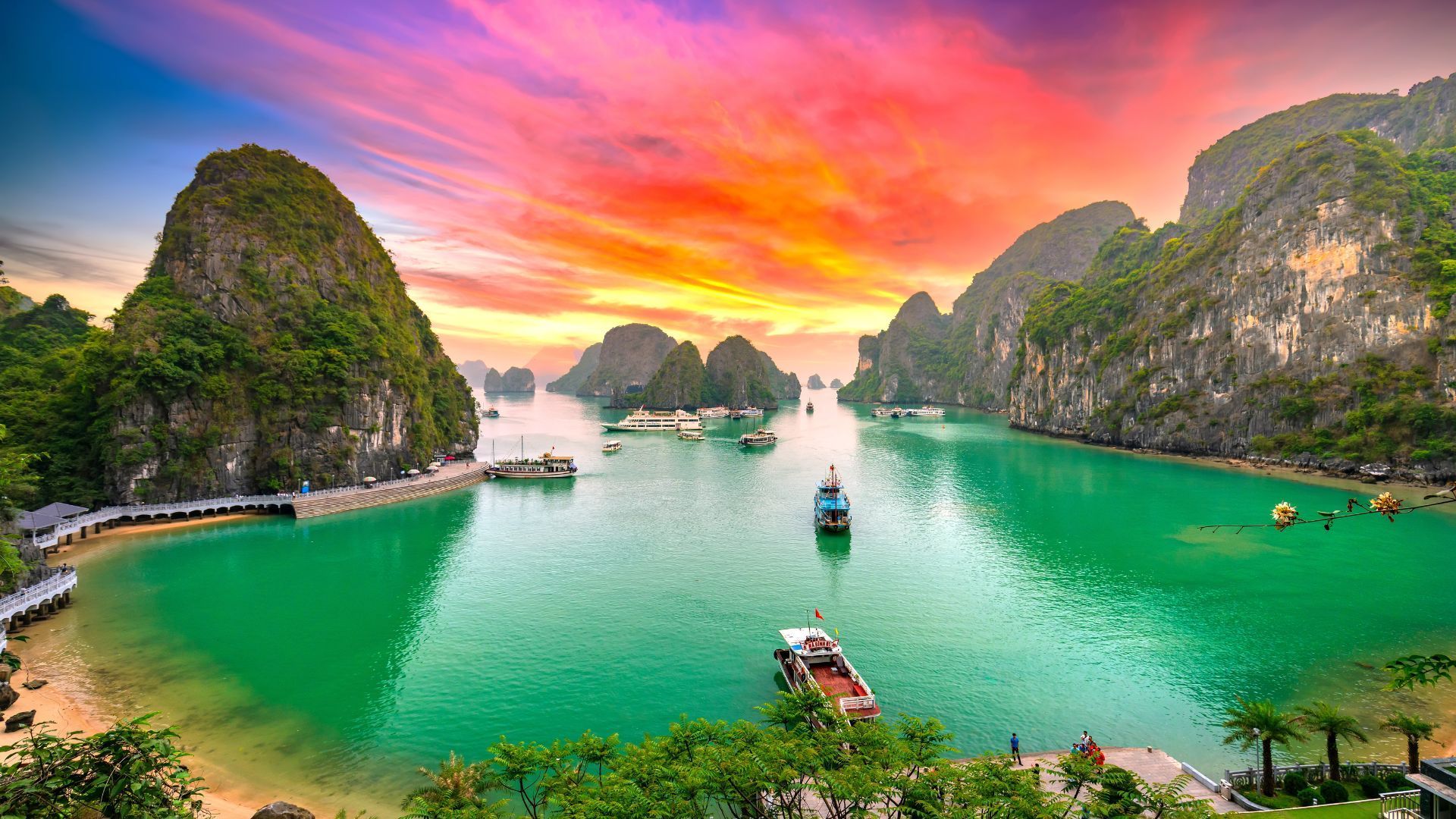
Skip day-tripper boats that return to the pier after three rushed hours. An overnight cruise in Halong Bay or the quieter Lan Ha Bay gives you front-row access to the Gulf of Tonkin’s towering limestone pillars.
-
Active Kayaking: Paddle through dark sea caves and open lagoons cut into prehistoric karst cliffs.
-
Ti Top Island: Climb the paved steps to the peak for a 360-degree viewpoint over emerald waters.
-
Sunset on Deck: Relax on the upper sun deck with a cold drink as dusk settles over the bay.
-
Heading South: Disembark by midday on Day 4, take an express highway transfer back to Hanoi airport, and catch an evening 1.5-hour domestic flight to Da Nang.
Days 5–6: What Makes Central Vietnam the Soul of the Trip?

Central Vietnam blends preserved history with scenic coastline. Stay in Hoi An, a 45-minute drive south of Da Nang airport.
How Do You Experience Hoi An Like an Insider?
-
Lantern Lit Evenings: Rent a bicycle to ride through the UNESCO-listed Ancient Town, crossing the Japanese Covered Bridge while hundreds of silk lanterns light up the canals.
-
Cam Thanh Coconut Village: Ride spinning bamboo basket boats through nipa palm groves, accompanied by local boatmen who show off traditional river maneuvers.
Is Ba Na Hills Worth the Hype?
Yes, especially if you want grand mountain views. Take one of the world’s longest single-track cable car systems up to the Sun World complex to walk across the famous Golden Bridge held up by giant stone hands.
Days 7–9: What Should You Not Miss in Ho Chi Minh City?

Fly one hour south from Da Nang to Ho Chi Minh City, the commercial engine of Vietnam. Wide boulevards, glass skyscrapers, and historic landmarks define the skyline.
-
Cu Chi Tunnels: Crawl through sections of the underground network used during the Vietnam War to understand the resilience of the local population.
-
War Remnants Museum: A sobering, deeply informative look at recent regional history.
-
Mekong Delta: Take a day excursion to My Tho and Ben Tre to cruise along palm-fringed canals, visit coconut candy workshops, and sample tropical fruit directly from riverside orchards.
Day 10: What Souvenirs Should You Bring Home to India?
Spend your final morning shopping before heading to Tan Son Nhat International Airport.
-
Ben Thanh Market: Pick up drip coffee filters (phin), packaged robusta coffee beans, roasted lotus seeds, and tailored linen shirts.
-
Airport Departure: Arrive at the airport three hours prior to departure, as international immigration queues in Saigon get long during late afternoon hours.
Frequently Asked Questions
Can vegetarian and Jain travelers find good food in Vietnam?
Yes. Buddhism is widespread in Vietnam, so vegetarian food is common. Look for signs that say “Quán Chay” (vegetarian restaurant). Most Vietnamese restaurants will gladly prepare fried rice, morning glory greens, and tofu noodle dishes without fish sauce (khong nuoc mam).
What is the best way to carry money in Vietnam?
The Vietnamese Dong (VND) is the official currency. Carry a zero-forex-markup credit card or multi-currency debit card (like Niyo or Scapia) for dining and hotel payments. For local markets, withdraw cash using your debit card at VPBank or TPBank ATMs, which often charge zero local ATM access fees.
Which local SIM card is most reliable for travelers?
Viettel offers the widest network coverage across Vietnam, including remote waters in Halong Bay and rural stretches of the Mekong Delta. You can pick up a physical SIM card or activate an eSIM at Hanoi airport for roughly 200,000 to 300,000 VND (₹700 to ₹1,000), giving you daily 4G/5G data.
How do you get around inside Vietnamese cities?
Download the Grab mobile app before arriving. It works exactly like Uber or Ola. You can book metered cabs or quick motorbike taxis with upfront pricing, avoiding language barriers and taxi meter scams.
Is Vietnam safe for solo travelers and female working professionals?
Vietnam is one of the safest travel destinations in Asia. Violent crime is extremely rare. Take standard travel precautions against petty street theft, such as keeping mobile phones and sling bags secure when walking near busy scooter roads.
What clothes should you pack for this 10-day route?
Northern Vietnam (Hanoi) experiences cooler temperatures between November and February, requiring a light jacket. Central and Southern Vietnam stay warm and tropical year-round. Pack light, breathable cotton or linen clothing, comfortable walking shoes, and modest attire (covering shoulders and knees) for temple visits.
References
-
Vietnam National Electronic Visa System: Official E-Visa Application Portal
-
Vietnam National Administration of Tourism: Official Tourism Information Resource
-
Ministry of External Affairs, Government of India: Bilateral Relations & Advisory on Vietnam
-
General Statistics Office of Vietnam: International Visitor and Tourism Statistics