Best eSIM for Indian Travelers in Bali for 2026

Planning a trip from India to the Island of the Gods? Whether you are flying out from Delhi, Mumbai, Bengaluru, or Chennai, staying connected the moment your flight touches down at Ngurah Rai International Airport (DPS) in Denpasar is essential.

From filling out your Indonesian Electronic Visa on Arrival (e-VOA) and digital customs declaration to booking Grab or Gojek rides and navigating with Google Maps, having instant mobile data saves you hours of airport queueing.

While international roaming packs from Indian carriers like Jio, Airtel, or Vi can quickly become expensive, an eSIM (embedded SIM) offers a cost-effective, hassle-free alternative. This guide breaks down the top eSIM options for Indian tourists, evaluating coverage, pricing, speed, and real-world network performance across Bali, Nusa Penida, and the surrounding islands.

Key Takeaways

  • The Network Rule: In Bali, the underlying network matters more than the eSIM brand. Choose a provider that partners with Telkomsel for the most reliable 4G/5G coverage across southern Bali and offshore islands like Nusa Penida.


  • Best Overall Pick: Jetpac offers top value (~$1–$1.50/GB or ₹85–₹125/GB), excellent speeds on Telkomsel, and bonus travel perks like airport lounge access during flight delays.


  • Best for Beginners: Airalo (Indotel) provides an easy-to-use mobile app, simple top-ups, and reliable connection across major tourist hubs.


  • Pro Tip for OTPs: Keep your primary Indian physical SIM active in Dual-SIM mode strictly to receive banking and login OTPs, while routing all mobile data through your Bali eSIM.

Why Telkomsel Coverage Matters for Your Bali Trip


Indonesia has four main mobile operators: Telkomsel, Indosat Ooredoo, XL Axiata, and Smartfren. However, their network performance across Bali varies significantly:

  • Telkomsel: The largest operator in Indonesia with the widest signal reach. It delivers uninterrupted 4G and 5G connections in popular towns (Canggu, Seminyak, Kuta, Ubud, Sanur) as well as remote locations like Uluwatu cliff roads, Mount Batur, and Nusa Penida.


  • XL Axiata & Indosat: Work fine in built-up cafe strips in Seminyak or Canggu, but signals frequently drop on coastal highways, interior mountain roads, or island fast-boat transfers.


When purchasing a travel eSIM, always verify that its local roaming partner in Indonesia includes Telkomsel.

Top 4 eSIM Providers for Indian Tourists in Bali Compared


eSIM Provider Local Indonesian Partner Network Typical Data Pricing (USD / INR approx.) Key Advantages Best For
Jetpac Telkomsel (5G/4G)

10 GB / 30 Days: ~$15.30 (₹1,280)


20 GB / 30 Days: ~$21.00 (₹1,760)

Fast speeds (up to 130+ Mbps), free flight-delay lounge access, reusable global profile. Best Overall Value & Performance
Airalo (Indotel) Telkomsel / Indosat (5G/4G)

3 GB / 7 Days: ~$8.50 (₹710)


10 GB / 30 Days: ~$24.75 (₹2,075)

User-friendly app, fast setup, easy in-app data top-ups. First-Time Travelers & Short Trips
Nomad Telkomsel / Smartfren

10 GB / 30 Days: ~$18.00 (₹1,500)


20 GB / 30 Days: ~$28.00 (₹2,340)

Reliable connectivity during day trips to Nusa Penida and Lombok. Island Hopping & Multi-Destination
Ubigi Indosat / XL Axiata 10 GB / 30 Days: ~$19.00 (₹1,590) Assigns a stable local IP, excellent for VoIP and remote video meetings. Digital Nomads & Remote Work

Detailed Review of Recommended eSIM Options


1. Jetpac eSIM (Top Recommendation)


Jetpac has emerged as one of the most reliable and budget-friendly eSIM options for Southeast Asia. Operating on the high-speed Telkomsel network, it consistently delivers speeds exceeding 100 Mbps in Bali.

  • Why it suits Indian travelers: You can purchase it using international credit/debit cards or global payment gateways before flying.


  • Standout Feature: Larger plans include complimentary SmartDelay lounge access if your return or connecting flight is delayed by more than an hour.

2. Airalo (Indotel)


Airalo is the most widely recognized global travel eSIM marketplace. Its dedicated Indonesia package, Indotel, provides steady performance across main tourist hubs like Canggu, Ubud, and Kuta.

  • Why it suits Indian travelers: The step-by-step installation instructions in the Airalo app make activation straightforward even for first-time eSIM users.


  • Consideration: Rates per gigabyte are slightly higher than Jetpac on larger data packages.

3. Nomad eSIM


Nomad is a strong alternative if your itinerary includes excursions beyond Bali’s mainland, such as Nusa Lembongan, Nusa Penida, or the Gili Islands in Lombok.

  • Why it suits Indian travelers: It automatically switches to available partner towers, maintaining signal stability in areas with uneven coverage.

Step-by-Step: How to Setup Your Bali eSIM from India


  1. Check Phone Compatibility: Ensure your smartphone is carrier-unlocked and supports eSIM technology (e.g., iPhone XS and newer, Samsung Galaxy S20/S21/S22/S23/S24 series, Google Pixel 3 and newer).


  1. Purchase Before Departure: Buy your chosen eSIM package 1–2 days prior to leaving India.


  1. Install the Profile: Scan the provided QR code or install directly via the provider’s iOS/Android app using your home Wi-Fi.


  1. Configure Dual-SIM Settings:

    • Set your Primary Indian SIM for Calls & SMS (to keep receiving OTPs from Indian banks). Turn off Data Roaming on this line to prevent unintended charges.

    • Set your Travel eSIM as the secondary line for Mobile Data. Turn on Data Roaming for the eSIM line.


  1. Activate Upon Arrival: When your aircraft lands at Denpasar (DPS) Airport, toggle your secondary eSIM line ON. It will automatically connect to Telkomsel or partner networks within 1–2 minutes.

Frequently Asked Questions


Will my Indian WhatsApp account still work on a data-only eSIM?


Yes. Your WhatsApp account is linked to your Indian mobile number, not your mobile data line. Once your eSIM connects to the internet in Bali, WhatsApp will continue operating as normal with all your existing chats and contacts intact.

Do I need to submit passport photos or IMEI registration for a travel eSIM?


No. Unlike physical SIM cards purchased locally at Bali airport (which require local IMEI registration and passport verification under Indonesian Ministry of Communication regulations), travel eSIMs like Jetpac or Airalo do not require complex local registration for short tourist visits.

Can I share internet connection (hotspot) from my eSIM to other devices?


Yes, providers like Jetpac, Airalo, and Nomad permit personal hotspot tethering. This allows you to share data with laptops, tablets, or family members during your trip.

To ensure you have the best bali trip from india, plan your travel logistics ahead by applying for an Indonesian e-VOA, paying the provincial tourist levy online, and keeping your primary Indian SIM active strictly for bank OTPs while using your local travel eSIM for seamless high-speed data.

References & Authoritative Sources


  • Ministry of Communication and Informatics (Kominfo), Republic of Indonesia: Telecommunications regulatory updates and spectrum allocation. https://www.kominfo.go.id/


  • Directorate General of Immigration, Ministry of Law and Human Rights, Indonesia: Official e-VOA and tourist arrival entry requirements. https://evisa.imigrasi.go.id/


  • Department of Telecommunications (DoT), Ministry of Communications, Government of India: Guidelines on international roaming and mobile services for outgoing travelers. https://dot.gov.in/

Where to Swim with Sea Turtles in the Gili Islands?

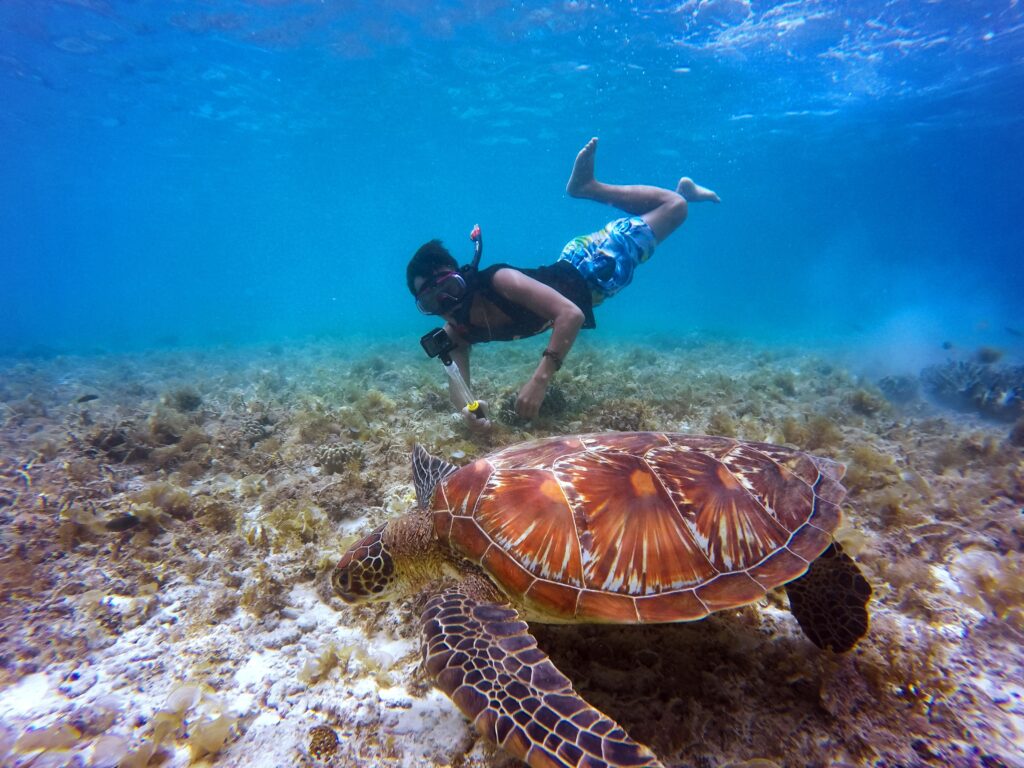
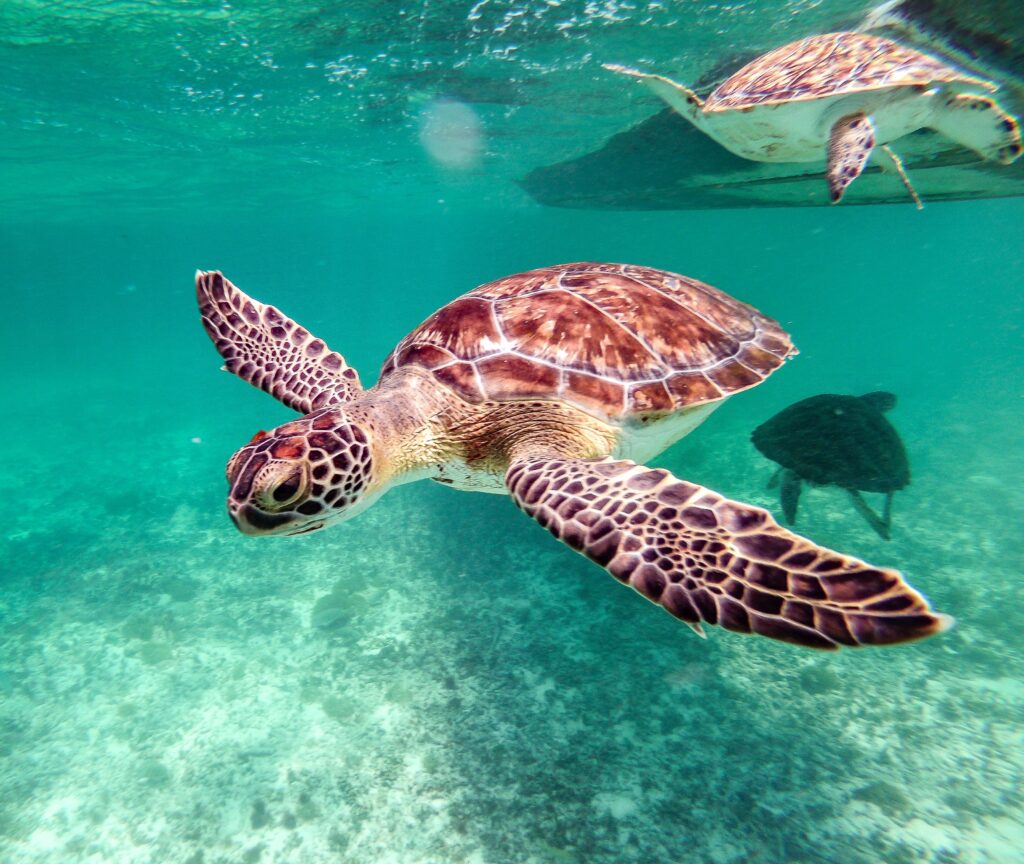
If you are planning an island getaway combining Bali with Gili Islands from India, swimming alongside wild Green and Hawksbill sea turtles is likely at the top of your bucket list. Located just off the northwest coast of Lombok, the three Gili Islands—Gili Trawangan (Gili T), Gili Meno, and Gili Air—are world-renowned marine sanctuaries where sea turtle sightings are virtually guaranteed.

However, knowing where and when to swim makes the difference between an overcrowded snorkel trip and a peaceful underwater encounter.

Here is an expert guide to the best turtle spots across the Gilis, local marine protection guidelines, and practical logistics for Indian travelers connecting from Bali.

📌 Executive Summary


  • Top Spots: Turtle Point (Gili Trawangan) and Turtle Heaven / NE Coast (Gili Meno) offer the highest density of wild turtle encounters in shallow water.

  • Transit from Bali: Fast boats depart daily from Padang Bai port in Bali, reaching the Gili Islands in roughly 1.5 to 2 hours.

  • Best Season: Dry season (May to October) provides optimal underwater visibility ranging from 15 to 25 meters.

  • Conservation Rules: Maintain a strict 2-meter distance. Never touch, chase, or feed sea turtles—Indonesian marine protection regulations prohibit physical contact with protected marine life [Source: Ministry of Marine Affairs and Fisheries, Republic of Indonesia].

The Top 3 Turtle Swimming Spots in the Gili Islands


The shallow reefs surrounding the Gili Islands form part of the Gili Matra Marine Protected Area (KKP Gili Matra), established to safeguard coral ecosystems and nesting grounds [Source: Ministry of Environment and Forestry, Republic of Indonesia].

                 Gili Trawangan (West)
                 • Spot: Turtle Point (North-East Reef)
                 • Depth: 1 to 3 meters (Shallow shore entry)
                               |
                               | Short local boat ride (~10 mins)
                               v
                     Gili Meno (Center)
                 • Spot: Turtle Heaven & Meno Wall
                 • Depth: 3 to 10 meters (Deep reef slope)
                               |
                               | Short local boat ride (~10 mins)
                               v
                      Gili Air (East)
                 • Spot: Han's Reef (East Coast)
                 • Depth: 5 to 15 meters (Macro life & calm currents)

1. Turtle Point (Gili Trawangan – Northeast Coast)


  • Best For: Shore-entry snorkeling without needing a private boat.

  • Depth: 1 to 4 meters.

  • What You’ll See: Green Sea Turtles (Chelonia mydas) grazing on seagrass beds just 20 to 30 meters off the beach.

  • Pro Tip: Head into the water at high tide during early morning hours (between 7:00 AM and 8:30 AM). You will beat the island’s tour boats and swim in calm, crystal-clear water before sand gets kicked up by swimmers.

2. Turtle Heaven (Gili Meno – Offshore Reef)


  • Best For: High-density sightings and photography.

  • Depth: 3 to 10 meters.

  • What You’ll See: A coral pinnacle where dozens of Hawksbill (Eretmochelys imbricata) and Green turtles gather to feed and rest. It is common to spot 5 to 10 turtles on a single dive or snorkel drift.

  • Pro Tip: Requires a short boat trip. Rent a private wooden glass-bottom boat from Gili T or Gili Air for around IDR 600,000 to 800,000 (~₹3,200 to ₹4,300) to arrive before public group tours arrive at 10:00 AM.

3. Meno Wall & NE Coast (Gili Meno)


  • Best For: Experiencing deeper wall drop-offs and calmer surroundings.

  • Depth: 5 to 18 meters.

  • What You’ll See: Turtles resting in small coral ledges along the vertical reef wall, alongside giant clams and reef fish.

Comparing the Islands: Which Base Fits Your Trip?


When arranging a Bali with Gili Islands from India itinerary, choosing where to stay depends on your preferred travel style:

Feature Gili Trawangan Gili Meno Gili Air
Atmosphere Vibrant, active nightlife, social Quiet, romantic, private Balanced, laid-back, yoga-focused
Turtle Accessibility Direct walk-in from NE shore Short boat ride to offshore pinnacles Shore entry on E coast / short boat ride
Water Conditions Gentle shore shelf; watch for boat traffic Deep drop-offs; exceptionally clear Shallow lagoon; calm currents
Best Suited For Solo travelers, groups, nightlife lovers Couples, honeymooners, relaxation Families, wellness travelers, divers

How to Plan a Bali to Gili Islands Transit from India


Connecting your arrival in Bali to the Gili Islands is straightforward if scheduled properly:

Step 1: Flight & Arrival in Bali

Direct and one-stop flights operate daily from major Indian metros (Delhi, Mumbai, Bengaluru) to Ngurah Rai International Airport (DPS) in Denpasar, Bali [Source: Directorate General of Civil Aviation, India].

Step 2: Transfer to Padang Bai Port

From Denpasar or Ubud, take a private airport or hotel taxi to Padang Bai Port in East Bali (approx. 1.5 hours drive).

Step 3: Fast Boat to Gili Islands

Board an authorized fast boat operator (such as Eka Jaya or Bluewater Express) licensed by the Indonesian Maritime Authority [Source: Ministry of Transportation, Republic of Indonesia]. The sea crossing takes approximately 1.5 to 2 hours depending on sea swells.

Traveler Advisory: Avoid scheduling your return fast boat from the Gilis to Bali on the same day as your international flight back to India. Ocean swells in the Lombok Strait can occasionally cause fast boat delays or suspensions. Always buffer at least one night in mainland Bali before your homeward flight.

Responsible Snorkeling: Code of Conduct

Sea turtles are legally protected under Indonesian Law No. 5 of 1990 on Conservation of Living Natural Resources [Source: Ministry of Environment and Forestry, Republic of Indonesia]. To protect marine life while snorkeling:

  1. Maintain Distance: Keep at least 2 meters (6 feet) of space between yourself and the turtle.

  2. Never Touch or Rest on Turtles: Oils and bacteria from human skin can harm their shells and stress the animals, forcing them to surface prematurely.

  3. Do Not Block Their Surface Path: Sea turtles are reptiles and must surface for air. Always leave a clear vertical path above them.

  4. Use Reef-Safe Sunscreen: Avoid chemical sunscreens containing oxybenzone or octinoxate, which bleach coral reefs and harm marine organisms [Source: UNESCO Intergovernmental Oceanographic Commission].

Frequently Asked Questions


What is the best month to swim with sea turtles in the Gili Islands?

The best time is during the dry season from May to October, when seas are calm and underwater visibility reaches up to 25 meters. July and August offer peak visibility, though water temperatures remain pleasant (~27°C to 29°C) year-round.

Do I need to be an expert swimmer to snorkel with turtles in Gili Trawangan?

No. At Turtle Point on Gili Trawangan, turtles swim in shallow waters (1 to 3 meters deep) just a short swim from the shore. Life jackets and snorkel gear are available for rent at almost every beachside kiosk.

Do Indian passport holders need a visa for Bali and the Gili Islands?

Indian travelers require a Visa on Arrival (VoA) or an e-VoA prior to travel, valid for 30 days and extendable once for an additional 30 days [Source: Directorate General of Immigration, Republic of Indonesia].

References & Authoritative Sources

  • Ministry of Environment and Forestry, Republic of Indonesia (Gili Matra Conservation): menlhk.go.id

  • Ministry of Marine Affairs and Fisheries, Republic of Indonesia: kkp.go.id

  • Directorate General of Immigration, Republic of Indonesia (e-VOA Portal): evisa.imigrasi.go.id

  • UNESCO Ocean Decade & Marine Biodiversity Guidelines: ioc.unesco.org

  • Directorate General of Civil Aviation (DGCA), India: dgca.gov.in

Is It Safe to Visit Bali in July/August? Here Are Answers to All Your Questions

July and August are Bali’s busiest months, and also the two months international travellers search the most safety questions about — not because the island is unusually dangerous, but because peak season brings peak crowds, peak scooter traffic, and peak scrutiny of every incident that makes headlines. Here’s a grounded, question-by-question look at what actually matters if you’re planning a July or August trip.

What is the weather like in Bali in July and August?

This is the easiest part of the trip to plan around: July and August sit at the peak of Bali’s dry season, and the weather is about as predictable as tropical weather gets. Daytime temperatures typically run 27–31°C, dropping to a comfortable 22–25°C at night, with humidity noticeably lower than the rest of the year. Rain is genuinely rare — most sources put it at just 2–4 light rain days for the entire month, usually short showers that clear within minutes rather than day-long downpours. Inland and highland areas like Ubud, Munduk, Kintamani, and Bedugul run cooler, sometimes dropping to 16°C at night, so a light layer is worth packing even though you won’t need one on the coast.

August adds one specific feature: stronger offshore winds as part of the seasonal monsoon shift, which is why kite-flying festivals cluster in Sanur this month, and why surfers head to the west coast breaks for cleaner, more consistent swell.

Is Bali safe to visit overall in July/August?

Yes — Bali remains one of the most-visited and comparatively safe tourist destinations in Southeast Asia, and the vast majority of visitors have trouble-free trips. That said, “safe” in Bali specifically means: violent crime targeting tourists is rare, but road accidents, water-safety incidents, petty theft, and scams are common enough that they deserve real attention before you land — more attention, honestly, than most pre-trip checklists give them. Government travel advisories (Australia’s Smartraveller, the US State Department, UK FCDO) generally ask travellers to “exercise normal safety precautions” or a level just above it, rather than advising against travel.

Is it safe to ride a scooter/motorbike in Bali?

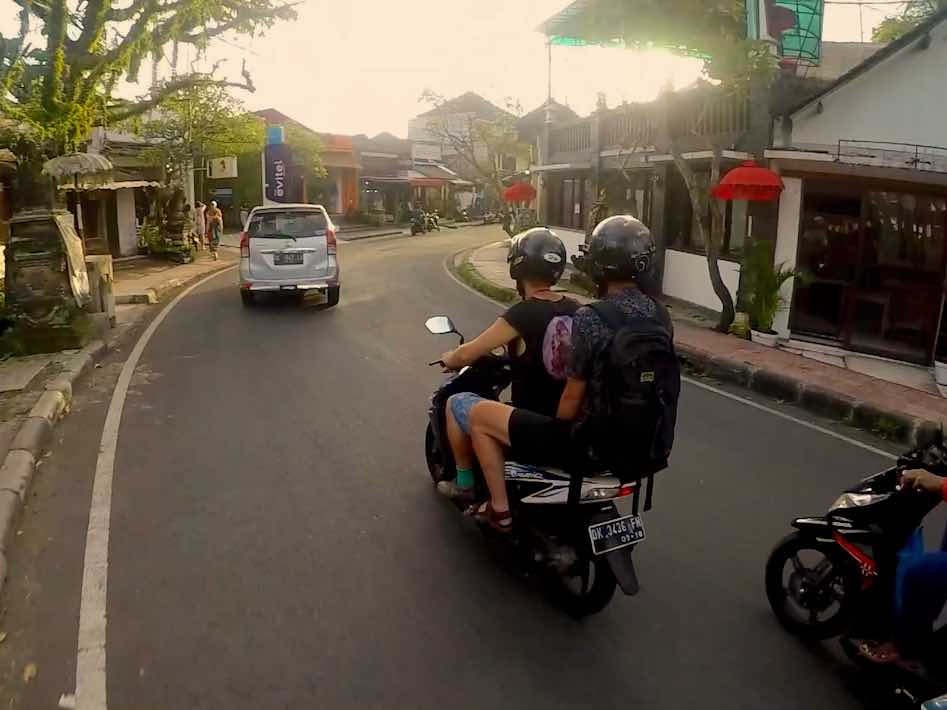
This is the single biggest real safety risk for tourists in Bali, and it’s worth being blunt about it: road traffic accidents are consistently the leading cause of serious injury and death among foreign visitors, far more than crime or natural hazards. Most incidents involve inexperienced riders who are unfamiliar with Balinese traffic patterns, riding without a helmet, riding at night, or riding after drinking. Practical steps that meaningfully reduce risk:

  • Get an International Driving Permit (IDP) before you travel — riding without one can void your travel insurance even if you’re a competent rider.
  • Always wear a proper helmet, not just the flimsy one that comes with a rental.
  • Avoid riding late at night around nightlife areas like Canggu, Seminyak, and Uluwatu, where accident rates spike.
  • If you’re not confident on two wheels in dense, left-hand-drive traffic, hire a driver instead — this is genuinely the safer and often more relaxing option for short-stay tourists.

Is it safe to swim at Bali’s beaches in July/August?

Mostly yes, but be selective about where. Several of Bali’s most popular beaches (Kuta, Legian, Uluwatu, Padang Padang, and stretches of Canggu) have real rip currents, and drownings do occur most years, disproportionately among tourists unfamiliar with reading them. The safest approach:

  • Swim only at beaches with lifeguard flags and stay within the flagged zones.
  • Ask locally if a beach is known for currents before swimming, especially if it’s not one of the main patrolled tourist beaches.
  • Avoid night swimming, and don’t swim after drinking.
  • Jellyfish and occasional sea urchins can cause painful stings — vinegar or hot water (not ice) is the standard first response for jellyfish stings, and it’s worth asking your accommodation what local advice is if you’re stung.

Is it safe to take a boat to Nusa Penida, the Gili Islands, or Lombok?

Take this one seriously — fast-boat safety has been a recurring, documented problem, with multiple boat-sinking and capsizing incidents involving tourist routes to Nusa Penida, Nusa Lembongan, and the Gili Islands reported over the past couple of years, including fatalities. Before booking any boat transfer:

  • Choose an established operator rather than the cheapest option sold on the beach.
  • Confirm the boat carries visible life jackets for every passenger and isn’t overloaded.
  • Avoid crossings during rough seas or storm warnings, even if it means delaying a day.
  • If a boat looks overcrowded or under-equipped, it’s reasonable to decline and wait for the next one or a different operator.

Are there active volcanoes I should worry about?

Bali has two active volcanoes, Mount Agung and Mount Batur. As of the most recent monitoring, Agung has generally sat at the lowest alert level (Level 1, “Normal”) through 2026, though Indonesia’s volcano authority (PVMBG) and regional disaster agencies do periodically flag minor seismic activity or steam venting — both described by officials as within normal background behaviour rather than signs of an imminent eruption. Neither volcano poses a routine risk to the main tourist areas (Kuta, Seminyak, Canggu, Ubud, Nusa Dua), which sit well outside any exclusion zone. If you’re planning to hike Agung or Batur specifically:

  • Check PVMBG’s current alert level before you go, not just the general “it’s usually fine” advice from older blog posts.
  • Go with a licensed local guide — most fatalities on Agung have involved unguided hikers in poor conditions rather than volcanic activity itself.
  • Avoid summit camping and limit time at the crater rim, per standard guide advice.
  • Watch for wider regional volcanic activity (Java’s Mount Semeru has occasionally affected Bali flight schedules through ash advisories, even without direct danger to the island).

Is there a rabies risk in Bali? What should I know about street dogs and monkeys?

Yes, and this is worth taking more seriously than most travellers do. Rabies is present in Bali’s dog population, and health authorities have periodically designated specific tourist areas — including parts of South Kuta, Nusa Dua, Jimbaran, and the Mengwi district near Canggu’s Pererenan and Seseh beaches — as higher-risk “red zones” following clusters of dog bites, with sporadic new cases (including one confirmed in West Bali in June 2026) still being reported. Rabies is close to universally fatal once symptoms appear, but fully preventable with prompt treatment. Practical steps:

  • Don’t pet, feed, or approach stray dogs or monkeys, including at otherwise “managed” sites like the Ubud Monkey Forest or Uluwatu Temple.
  • If you’re bitten or scratched by any mammal, wash the wound thoroughly with soap and running water for a full 15 minutes, then go to a clinic immediately for post-exposure treatment — don’t wait to see if symptoms appear.
  • If you’re travelling for an extended stay, doing significant trekking, or generally will be around animals a lot, ask your doctor about pre-exposure rabies vaccination before you fly.
  • Confirm your travel insurance explicitly covers rabies post-exposure treatment, since this is a real and not-hypothetical need for some travellers each year.

What are the most common scams in Bali, and how do I avoid them?

None of these are dangerous, but they’re common enough to plan around:

  • Unmetered taxis and inflated fares — use licensed Blue Bird taxis or ride-hailing apps (Grab, Gojek) and confirm the fare or meter before you set off.
  • Currency exchange scams — only use licensed money changers (look for official authorization signage) or banks; street-side “great rate” exchanges are a well-known trick.
  • Fake visa and tourist-tax websites — the Bali tourist levy and e-VOA visa should only be paid through official government channels (see references below); third-party sites charging inflated “service fees” or appearing in paid search ads are a documented, ongoing scam.
  • Commission-driven drivers — some private drivers steer you toward specific restaurants or shops that pay them a cut; it’s fine to firmly redirect them to where you actually want to go.
  • Motorbike “damage” deposit disputes — photograph your rental bike from multiple angles before you ride off, so there’s no dispute about pre-existing damage when you return it.

Do I need a visa, and how does the tourist tax work?

Most nationalities can get a Visa on Arrival (VOA) or, better, apply for the e-VOA online in advance, which lets you skip the arrival queue and use the automated e-gates. Separately, Bali charges a one-time tourism levy (currently IDR 150,000, roughly USD 9) for all foreign visitors, in effect since February 2024, payable through the official government portal before or on arrival. A few important, current details:

  • Complete the Indonesia arrival card (which now combines the old customs, health, and immigration forms) online within a few days before you fly — it’s free.
  • Pay the tourist levy and the e-VOA only through official government sites; recurring “subscription” charges or inflated processing fees are the signature of a scam site.
  • Keep your passport valid for at least six months from your arrival date, and carry proof of onward or return travel — this is checked more consistently than in past years.

What health precautions should I take for a July/August Bali trip?

  • “Bali belly” (traveller’s diarrhoea) is common — stick to bottled or filtered water, be selective with street food and raw dishes, and carry basic rehydration salts just in case.
  • Dengue fever is present year-round in tropical climates like Bali’s — use mosquito repellent, especially at dawn and dusk, and consider long sleeves in the evenings.
  • Rabies — see above; this deserves specific attention, not just a general “avoid animals” note.
  • Travel insurance should explicitly cover medical evacuation — serious cases, particularly from diving, surfing, or trekking injuries, sometimes require transfer to larger hospitals in Denpasar or Jakarta.

What should I know about local customs and dress in July/August specifically?

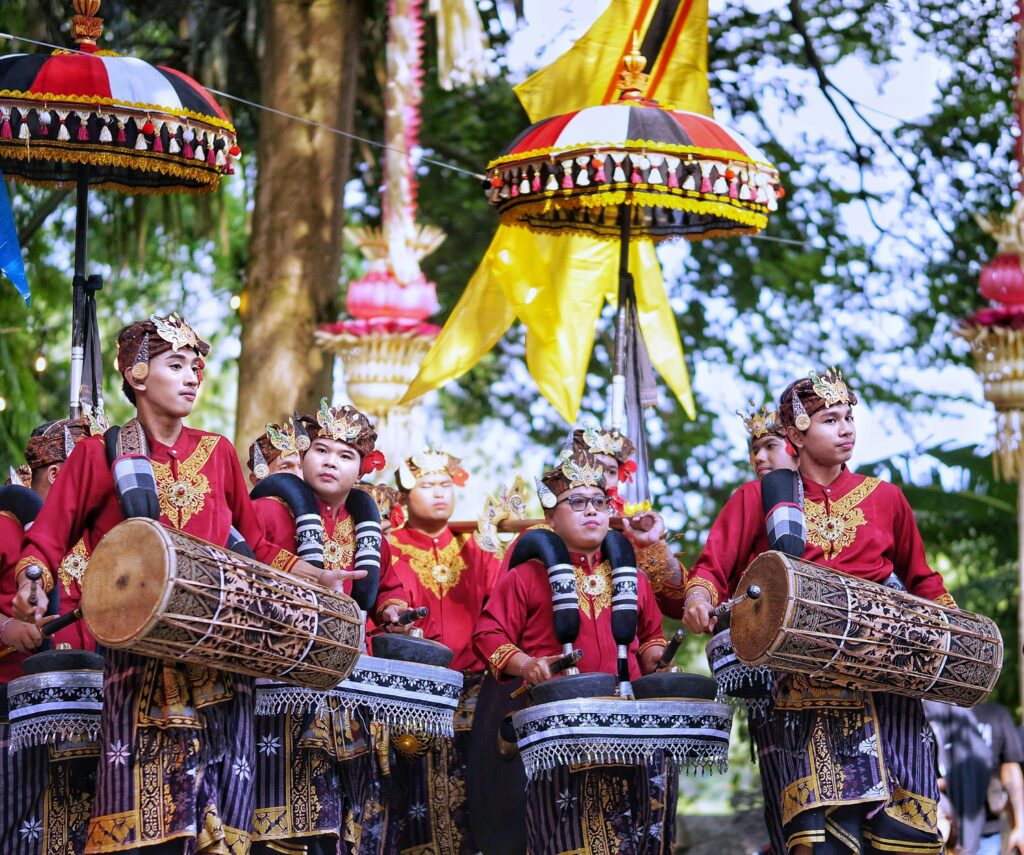
Bali is predominantly Hindu, distinct from the rest of Muslim-majority Indonesia, and is generally relaxed about swimwear and casual dress in beach and tourist areas. That said, cover shoulders and knees when visiting temples (a sarong and sash, often provided or rented on-site, are standard), and always ask before photographing ceremonies or people. July–August is a lively festival period — the Bali Kite Festival at Sanur and various regional celebrations run through these months — so expect some roads near festival sites to be temporarily closed or congested; this is normal and not a safety concern, just worth building into travel-time estimates.

Is Bali crowded and expensive in July/August? Does that affect safety or logistics?

Yes, noticeably — July and August are peak season, meaning higher accommodation and car-rental prices (car rental and driver costs can rise 20–30%), fully booked restaurants and popular attractions, and heavier traffic, especially around Canggu, Seminyak, and Uluwatu. This isn’t a safety issue in itself, but it does mean:

  • Book transport, tours, and accommodation well in advance.
  • Build in extra travel time between destinations, since traffic congestion is worse in peak months.
  • Popular sunrise treks (Batur) and temple visits get busy — arrive early if you want a quieter experience.

Quick answer

Bali is safe to visit in July and August for the great majority of travellers, and the weather is genuinely as good as it gets — dry, sunny, and comfortable. The real risks worth planning around aren’t crowds or heat, but road traffic (wear a helmet, get an IDP, avoid night riding), water safety (swim at flagged beaches, vet your boat operator before island-hopping), animal contact (rabies is a real, present risk — don’t touch strays), and the handful of well-documented scams around taxis, currency exchange, and visa/tax websites. None of these should keep you home; they should just shape a few specific decisions once you’re there.


Official sources for travel safety, visa, and weather updates

Volcanic alert levels, boat-safety advisories, and rabies red-zone designations can all change with little notice. Check these official sources close to your travel date rather than relying on any single blog, including this one, as a final word.

Vietnam vs. Bali – The Ultimate Summer Showdown for Indian Travelers

It’s the classic summer vacation dilemma. You’ve finally blocked your dates between June and August, you want a tropical international escape, and you want to keep flight times reasonable. But you’re staring at two completely different blueprints for a perfect trip.

Do you head to Bali, the ultra-aesthetic island of beach clubs, Instagrammable private pool villas, and predictable summer sunshine? Or do you jet off to Vietnam, the mainland giant of mind-blowing street food, staggering limestone landscapes, and value-for-money luxury that gives Goa a serious run for its money?

Let’s skip the generic brochure talk. Here is an unfiltered, side-by-side breakdown tailored specifically for Indian travelers to help you sort out your summer itinerary.

1. The Weather View (The Critical Summer Factor)

Summer is where the weather patterns between these two destinations diverge completely. When booking a trip for the Indian summer vacation window, this should be your very first consideration.

  • Bali: Peak Dry Season. While India is dealing with intense heatwaves and the onset of the monsoon, summer is prime time for Bali. The weather is spectacular—sunny, pleasant, and blessed with low humidity and cool evening breezes. It is ideal for beach hopping and outdoor exploring. The catch? Because the weather is perfect, it is also peak global tourist season, meaning flight prices spike and popular spots are crowded.

  • Vietnam: Regional Mixed Bag. Vietnam stretches over 1,600 km, so its summer weather depends entirely on where you go.

    • Central Vietnam (Da Nang, Hoi An, Nha Trang): Perfect, sunny beach weather (though it can get quite hot in the afternoon). This is the region to focus on for a summer trip.

    • North (Hanoi, Ha Long Bay) & South (Ho Chi Minh City): Hot, highly humid, and prone to sudden, heavy afternoon monsoon downpours—very similar to Mumbai or Kerala monsoons.

☀️ The Weather Verdict: If you want guaranteed, wall-to-wall sunshine with zero rain planning, Bali wins summer hands down. If you choose Vietnam, anchor your itinerary around the central coast (Da Nang and Hoi An) to get the best of the season.

2. Personality-Wise: What’s Your Vibe?

Your travel personality dictates which destination will feel right. Are you looking to slow down and unwind in a curated paradise, or are you chasing an energetic, sensory-rich journey?

The Luxury Relaxer & Cafe Hopper 🧘‍♀️ → Go to Bali

Bali is the undisputed capital of curated island living. If your perfect vacation involves staying in a stunning private pool villa in Ubud, catching a sunset at a cliffside beach club in Uluwatu, or exploring beautiful cafes, Bali is unmatched. It feels like a ready-made paradise where comfort, aesthetics, and laid-back luxury are seamlessly packaged. It’s perfect for couples, honeymooners, or anyone looking to reset.

The Backpacker & Cultural Explorer 🥢 → Go to Vietnam

Vietnam is a dynamic, high-energy adventure that rewards travelers who love to explore. If you want to pull up a tiny plastic stool on a bustling Hanoi sidewalk for a bowl of Pho, wander through centuries-old lantern-lit alleys in Hoi An, or cruise past misty limestone karsts in Ha Long Bay, choose Vietnam. It offers a raw, deeply authentic cultural immersion and a vibrant street life that hits close to home while feeling entirely new.

3. Money-Wise: The Budget & Rupee Breakdown

Both destinations offer incredible value compared to Western travel, but your Indian Rupee (INR) stretches differently in each. On a pure cost-of-living basis, Vietnam is roughly 30% to 40% cheaper than Bali.

Moreover, the currency conversion in Vietnam feels like an instant upgrade: 100 INR gets you around 30,000 Vietnamese Dong (VND), making you a literal millionaire the moment you land. Bali uses the Indonesian Rupiah (IDR), where 100 INR gets you roughly 19,000 IDR.

Expense Category Vietnam Bali The Bottom Line
Flights (from India) ₹22,000 – ₹35,000 (Direct flights via VietJet/Air India) ₹32,000 – ₹48,000 (Often requires a layover) Vietnam is generally cheaper and faster to fly to from major Indian hubs.
Daily Living Budget ₹2,500 – ₹4,000 / day ₹4,500 – ₹7,500 / day Vietnam stretches a tight budget significantly further for shopping and sight-seeing.
Private Pool Villas ₹4,000 – ₹7,000 / night ₹7,000 – ₹15,000+ / night Bali’s accommodation commands a premium during the summer peak.
The Food Situation Incredible local vegetarian/vegan options emerging; heavily meat/seafood dominant. Universal availability of Indian restaurants, vegetarian food, and Jain options. Bali is much easier for strict vegetarians or those who prefer Indian food abroad.
Hidden Costs E-Visa is around ₹2,100. No tourist tax. Visa on Arrival is around ₹2,700 + Bali Tourist Tax (approx. ₹800). Bali’s entrance fees and beach club minimum spends stack up quickly.

4. View-Wise: Beaches, Peaks, and Landscaped Horizons

What do you want to see when you look out your hotel window or step off a scooter?

The Coastlines & Cliff View

  • Bali: Highly diverse, compact coastal views. You get dramatic limestone cliffs drop-offs in Uluwatu, surfable breaks in Canggu, and black volcanic sand beaches in the north.

  • Vietnam: Massive, wide stretches of powder-white sand along the central coast (Da Nang) backed by lush green mountains, though the beach towns feel more like modern coastal cities.

The Terraces & Natural Wonders

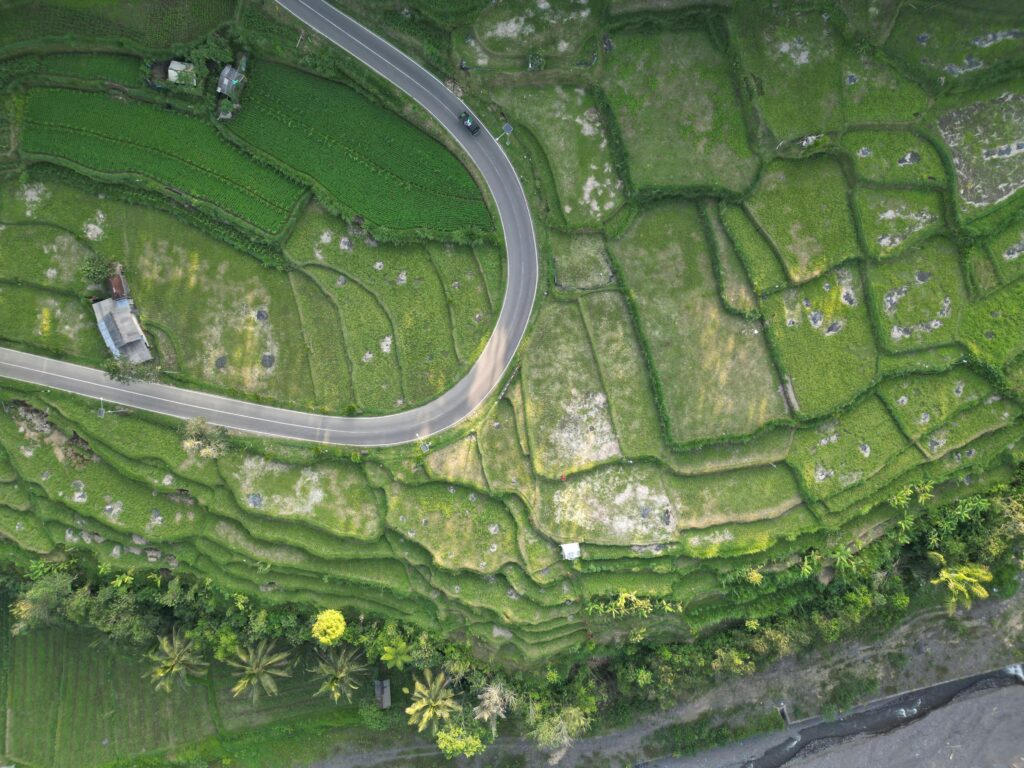
  • Bali: Stunning, compact palm-fringed rice terraces like Tegallalang in Ubud, alongside hidden jungle waterfalls. Everything is reachable within a relatively short drive.

  • Vietnam: Staggering, large-scale dramatic landscapes. Think of the colossal terraced mountains of Sapa, the vast cave systems of Phong Nha, and the legendary emerald waters of Ha Long Bay.

5. The Indian Traveler Comfort Checklist

1. Food & Vegetarian Options

  • Bali: A breeze for Indian food lovers. From local Warungs serving vegetarian Nasi Goreng to high-end Indian restaurants in Kuta, Seminyak, and Ubud, you will never struggle for food. Jain food is also easily available in tourist hubs.

  • Vietnam: Famous for fresh ingredients, but traditional fish sauce is used in almost everything. While finding pure vegetarian (Chay) food requires a bit of research and map-pinning, major cities now have excellent Indian restaurants and vegan cafes.

2. Shopping

  • Bali: Great for boutique clothing, linen wear, bohemian home decor, silver jewelry, and souvenirs from local markets like Ubud Market (where your Indian bargaining skills will come in handy).

  • Vietnam: A paradise for affordable shopping. From high-quality duplicate sneakers and outdoor gear (North Face jackets) in Hanoi’s Old Quarter to custom-tailored suits and dresses made overnight in Hoi An for a fraction of Indian prices.

The Ultimate Verdict: How to Choose

  • Choose Bali if… You want a classic, seamless tropical vacation. You are looking to unpack once or twice, prioritize relaxation, stay in a gorgeous villa, enjoy aesthetic beach clubs, want guaranteed excellent summer weather, and need easy access to vegetarian or Indian food.

  • Choose Vietnam if… You want an exploratory journey filled with world-class coffee, deep history, and diverse landscapes. You don’t mind navigating regional summer humidity because you value maximum monetary value, affordable shopping, and want to explore multiple distinct cities.

Planning from Delhi? Flight Connectivity Simplified

If you are mapping out a vietnam trip from delhi, you are in luck when it comes to travel time and budget. Airlines like VietJet, Vietnam Airlines, and Air India operate frequent direct flights from Indira Gandhi International Airport (DEL) to Hanoi and Ho Chi Minh City, getting you there in just 4 to 5 hours. On the flip side, planning a bali trip from delhi usually means a slightly longer journey. While direct flights do operate a few times a week, many budget-friendly options involve a short layover in cities like Kuala Lumpur or Singapore, bringing the total travel time to around 9 to 11 hours. If quick, cheap, direct connectivity is your priority, Vietnam takes the win from Delhi.

10 Unmissable Experiences in the Gili Island

The Gili Islands—a sun-drenched trio of sand specks off the coast of Lombok—are the ultimate escape from the motorized chaos of mainland Bali. Whether you are heading to Gili Trawangan for the energy, Gili Air for the laid-back social scene, or Gili Meno for total seclusion, the “Gilis” offer a rhythm of life that is increasingly rare.

Here are 10 of the best things to do in this tropical archipelago.

1. Snorkel with Hawksbill Turtles

2026 Turtle Beach Power Snorkeling Adventure (with Reviews)

The Gili Islands are often called the “turtle capital of the world.” You don’t even need a boat to see them; on Gili Trawangan (North Beach) and Gili Meno (Turtle Point), you can simply walk into the turquoise shallows with a mask and fins. Seeing these prehistoric creatures gliding through the water is a core Gili experience.

2. Experience “Gili Transportation” (Biking)

Getting around the Gili Islands - Lonely Planet

There are no cars or motorbikes allowed on any of the islands. To get around, you’ll rely on your own two feet or a rented cruiser bike. Cycling around the entire perimeter of Gili T takes about an hour, offering a scenic tour of coconut groves, hidden cafes, and coastal views.

3. Dive the Underwater Statues (NEST)

Nest - Underwater Sculpture by Jason deCaires Taylor

Located just off the coast of Gili Meno, “Nest” is an hauntingly beautiful underwater sculpture by artist Jason deCaires Taylor. Featuring 48 life-sized human figures arranged in a circle, the installation acts as an artificial reef. It’s easily accessible for both snorkelers and scuba divers.

4. Catch a Sunset at a Beach Club

The west side of Gili Trawangan is the place to be as evening approaches. Beach clubs like The Exile or Casa Vintage offer beanbags on the sand, bonfires, and live acoustic music. Watching the sun dip behind Bali’s Mount Agung in the distance is a nightly ritual here.

5. Island Hop via Public Boat

Don’t settle for just one island. Small public “island hopper” boats run twice daily between Trawangan, Meno, and Air. It’s an affordable way to compare the vibes: go to Meno for the silent beaches, and head to Air for the best coffee shops and boutique shopping.

6. Feast at the Gili T Night Market

GILI TRAWANGAN NIGHT MARKET - Restaurant Reviews, Phone Number & Photos -  Tripadvisor

When the sun goes down, the central square on Gili Trawangan transforms into a sprawling food market. This is the best place for an authentic Nasi Campur. You can pick your own skewers of fresh seafood, satay, and vegetables, which are grilled to order right in front of you.

7. Try Subwinging

SUBWING GILI ISLANDS (2026) All You Need to Know BEFORE You Go (with  Photos) - Tripadvisor

For the thrill-seekers, “Subwinging” is the newest craze in the Gilis. You hold onto two fins connected to a slow-moving boat, allowing you to “fly” underwater, perform rolls, and dive deep with minimal effort. It’s a surreal way to see the reefs.

8. Take a Traditional Indonesian Cooking Class

If you want to take a piece of the islands home, join a cooking class. Many local schools, like Gili Cooking Classes, teach you how to make peanut sauce from scratch, yellow curry, and Gado-Gado. Most sessions end with a communal feast of everything you’ve prepared.

9. Master the Art of “Slow Living” on Gili Air

Gili Air strikes the perfect balance between the other two islands. Spend a day at a yoga shala, or simply find a hammock at a beach bar and read a book. The “East Coast” of Gili Air offers some of the clearest water for a peaceful morning swim before the day-trip boats arrive.

10. Horseback Riding on the Beach

For a truly cinematic experience, several stables offer sunset horse rides. Trotting through the shallow surf as the sky turns shades of pink and orange is a favorite for couples and photographers alike.

Connecting Your Bali Trip to the Gilis

Most travelers visit these islands as part of a larger bali trip, and the transition from the mainland is surprisingly easy. Fast boats depart daily from several ports in Bali, including Padang Bai (closest to Ubud) and Sanur or Serangan (closest to Seminyak and Kuta).

Quick Tips for Travelers:

  • Cash is King: While some larger hotels take cards, many local warungs and shops prefer Indonesian Rupiah (IDR).

  • Respect the Reef: Use reef-safe sunscreen and never touch the turtles or coral.

  • Stay Hydrated: The islands are hot and humid; look for “Refill My Bottle” stations to reduce plastic waste.

6 Things to Never Do in Bali (Unless You Want to Go Viral for the Wrong Reasons)

So, you’ve booked the flight, bought the linen shirts, and practiced your “peace sign” in the mirror. You’re ready for Bali. But here’s the thing: Bali is currently in its “Villain Era” regarding disrespectful tourists. Between the local news pages (looking at you, Bali Bogans) and the viral Instagram reels, the line between “Living my best life” and “Deported for being a menace” has never been thinner.

If you want to stay off the local shame-reels and keep your passport in your pocket, here are 6 things you absolutely should not do.

1. Dressing Like You’re at a Pool Party… in a Temple

The Best Pool Parties In Bali Are At FINNS Beach Club

Bali’s temples (Puras) are breathtaking, but they aren’t backdrops for your latest swimwear haul.

  • The Mistake: Walking into a sacred space in a bikini or shirtless.

  • The Consequence: You’ll be asked to leave (rightfully so), and someone will likely film your “But it’s hot!” argument for the world to see.

  • The Fix: Wear a sarong. Most temples rent them at the entrance for a few rupiah. Cover those shoulders, keep it classy, and show some respect for the local culture.

2. The “Naked Hike” (Or Any Naked Anything)

It seems like a trend, doesn’t it? Stripping down on a sacred mountain or in front of a thousand-year-old tree for the “aesthetic.”

  • The Mistake: Thinking the “Natural Look” applies to public, sacred landmarks.

  • The Consequence: This is the fastest way to get a one-way ticket to the airport and a lifetime ban from Indonesia.

  • The Fix: Keep your clothes on. If you want a nude photo, stay in your private villa’s infinity pool. The mountains are considered homes of the gods, and they didn’t invite you to a clothing-optional party.

3. Playing “MotoGP” Without a License

A Guide to Riding a Scooter in Bali - Sling Adventures

We get it—scooters are the ultimate way to zip through Ubud’s traffic. But if the only thing you’ve ever driven is a bicycle, Bali’s chaotic roads are not the place to learn.

  • The Mistake: Riding a scooter in a sarong, with no helmet, while filming a 360° video.

  • The Consequence: “Road rash” is a painful souvenir. Plus, local police are cracking down on unlicensed riders. You don’t want to be the star of a reel titled “Another Tourist Who Can’t Drive.”

  • The Fix: Take a Grab or Gojek bike. It’s cheap, safe, and you can actually look at the scenery instead of fearing for your life.

4. Treating Sacred Trees Like Gym Equipment

You’ve seen the giant Banyan trees—they’re ancient, majestic, and… strictly not for climbing.

  • The Mistake: Scaling a 700-year-old tree for a “jungle vibes” photo.

  • The Consequence: These trees are often considered Kayu Suci (holy wood). Climbing them is a massive insult to the community.

  • The Fix: Take the photo from the ground. The perspective is actually better, and you won’t have to issue a tearful apology video on TikTok the next day.

5. Getting Into a “Karen-Off” With the Local Authorities

Whether it’s a traffic stop or a disagreement over a bill, staying calm is the golden rule in Bali.

  • The Mistake: Raising your voice, pointing fingers, or acting like your vacation makes you the boss of the island.

  • The Consequence: Balinese culture highly values “Tri Hita Karana” (harmony). Screaming in public is seen as a massive loss of face. You’ll find that doors (and hearts) close very quickly when you lose your cool.

  • The Fix: Smile, stay polite, and use your “inside voice.” A little kindness goes a long way in getting things resolved.

6. Ignoring the “Nyepi” Rules

If you happen to be in Bali during Nyepi (the Day of Silence), the whole island shuts down. No lights, no travel, no noise.

  • The Mistake: Trying to sneak out to the beach or playing loud music in your villa during the silence.

  • The Consequence: The Pecalang (village security) will find you. It’s not a suggestion; it’s a sacred law.

  • The Fix: Embrace it! It’s the one day a year the Earth gets to breathe. Stock up on snacks, turn off your phone, and enjoy the most star-filled sky you’ve ever seen.

Bonus: Thinking “Anything Goes” With Local Nightlife

19 Safety Tips for Partying in Bali During Your 2026 Trip

The “Wild West” era of Bali’s red-light-adjacent nightlife is officially under the microscope.

  • The Mistake: Thinking that solicitation or engaging with sex workers is a “gray area” that authorities ignore.

  • The Reality: Prostitution has always been illegal, but under the New 2026 Criminal Code, the laws regarding “morality” and “decency” are much tighter. Plus, immigration is now using social media to track “disturbing” behavior.

  • The Viral Trap: Getting caught in a “sweep” at a local club or bar. These raids are frequently filmed by local press or bystanders. Ending up on the news in a blurred-out-but-totally-recognizable video is a one-way ticket to losing your job back home and getting a permanent “X” on your Indonesian visa.

  • The Fix: Keep your nose clean. Bali’s nightlife is world-class for its music, beach clubs, and mixology—stick to the high-end bars and legitimate parties. If you have to ask, “Is this legal?”, the answer is probably a resounding “No.”

Plan your bali trip with us to make sure you never do viral for wrong reasons.

Bali Belly – Fact, Fiction, and Fatal Mistakes

I’ve spent enough time trekking through the back alleys of Ubud and surfing the breaks in Uluwatu to know that the “Bali Glow” is often just a thin veil for the “Bali Bloat.” We’ve all seen it: one day you’re posting a sunset shot with a coconut, and the next, your Instagram feed goes silent because you’re curled in a fetal position on a cold villa floor.

Let’s get real about Bali Belly. It isn’t a rite of passage; it’s a biological hijacking. After years of navigating the archipelago, I’ve realized that most of what we’re told about staying safe is either outdated or dangerously optimistic.

The “Safe” Salad Trap

We’ve been conditioned to think that a $15 avocado toast in a chic, air-conditioned cafe is “safer” than a $2 plate of nasi campur from a roadside warung. That’s the first mistake I made.

In reality, that high-end salad is a high-risk vehicle. Those organic micro-greens are washed in local water, and their porous surfaces are expert at trapping the very bacteria that want to ruin your week. I’ve had better luck with steaming hot satay sticks straight off a charcoal grill—where the heat has effectively nuked any pathogens—than I have with “cleansing” green juices.

The takeaway? Heat is your best friend. If you see steam rising from your plate, your odds just improved by 80%.

Why Your Probiotic Might Be Useless

I used to be the person who spent $50 on “travel-specific” probiotics a month before departure. I thought I was building a fortress.

Here’s the counter-intuitive truth: dropping a bunch of foreign “good” bacteria into your gut right before you hit the tropics can sometimes create a civil war in your digestive tract before you even land. I’ve found that instead of trying to “pre-game” my gut, the real secret is Activated Charcoal. I don’t go anywhere without it. The second I feel that weird, heavy “dropping” sensation in my stomach, I take a couple. It acts like a sponge for toxins, often stopping the bacterial party before it turns into a full-blown riot.

The Invisible Entry Points

We all know not to drink the tap water. That’s Travel 101. But I watched a friend get leveled for four days because of a shower.

It’s the “autopilot” moments that get you:

  • The Shower Sing-Along: You’re rinsing your hair, you catch a little spray in your mouth. Game over.

  • The Cocktails: You’re at a high-end beach club. The ice is “circular” (usually safe), but the garnish? That slice of lime was handled by someone who might have just rinsed it in a bucket of tap water.

  • The Gym: You wipe your sweat, touch a communal dumbbell, and then grab your water bottle.

The “So What?” here is that you can’t just be careful about what you eat. You have to be paranoid about what you touch.

The Survival Protocol

If you do end up losing the battle—and let’s face it, even the pros do—forget the “BRAT” diet for a second. Your body doesn’t want toast; it wants its chemistry back.

In Bali, we have a secret weapon: Pocari Sweat. It’s the local version of Gatorade but arguably more effective at replacing the specific electrolytes you lose in the humidity. If things get dark, don’t play hero. There are “IV Drip” services that will literally come to your villa, hook you up to a bag of saline and vitamins, and have you back on your feet in two hours. It’s the best $80 I’ve ever spent in Indonesia.

A Skeptic’s Final Word

Don’t let the fear of the bathroom keep you from the island. Bali is incredible, and the food culture is world-class. But stop treating it like a sanitized resort in the suburbs. It’s a tropical environment with a different microbial signature.

Wash your hands like you’re about to perform surgery, stick to the “peel it or cook it” rule, and for the love of everything holy, keep your mouth shut in the shower.

Upgrade your itinerary, not your medical bill. Experience your Bali trip through the curated, ‘belly-safe’ lens of Altiverse Adventure.

Everything you Need to Know Before Visiting Bali in 2026

For the Indian traveler, Bali in 2026 is no longer just “Goa with bigger temples.” It has evolved into a high-utility destination that perfectly balances the Indian Rupee’s strength with world-class luxury. Traditional guides are now obsolete because they fail to mention the direct flight connectivity from major Indian metros, the transition to digital-only customs, and the significant 2026 visa reforms specifically targeting high-value tourists from the subcontinent.

Navigating Bali trip as an Indian requires a specialized lens. You need to understand the synergy between the two cultures (from the Shared Sanskrit roots to the Tri Hita Karana philosophy) while mastering the technical logistics of the 2026 Love Bali tax and the new e-VoA protocols. This guide is your technical blueprint for mastering the island.

What is the most efficient way to reach Bali from India in 2026?

The transit landscape has shifted from “Mandatory Layovers” to “Direct Dominance.”

  • The Direct Advantage: As of April 2026, Air India and IndiGo operate daily direct flights from Delhi and Mumbai to Denpasar (DPS). The flight time is approximately 7.5 to 8 hours. This bypasses the exhaustion of transiting through Southeast Asian hubs.

  • The Layover Logic (Budget Choice): If flying from cities like Bangalore or Chennai, transiting through Singapore (Changi) via Singapore Airlines or Kuala Lumpur via AirAsia remains the most cost-effective. However, in 2026, I recommend the direct route to save nearly 5 hours of total travel time.

  • Airport Mastery: Denpasar Airport (DPS) now features Autogates. If you have pre-applied for your e-Visa, you can scan your passport and exit in under 10 minutes, avoiding the manual queues that can take over an hour for the standard Visa on Arrival (VoA).

How do I secure the Bali Visa and Tourist Levy for Indians this year?

In 2026, you are essentially managing two separate government requirements before you land.

  • The e-VoA (B1 Visitor Visa): While you can still get a sticker at the airport, the e-VoA is the industry standard for 2026. It costs 500,000 IDR (approx. 2,750 INR). It is valid for 30 days and can be extended once online.

  • The Mandatory Bali Tourist Levy: This is a separate 2026 provincial tax of 150,000 IDR (approx. 850 INR). You must pay this via the Love Bali portal. Carry a digital or printed QR code of the payment; it is frequently checked at major cultural sites like Uluwatu or Tanah Lot.

  • The 3-Day Rule: You must complete the Electronic Customs Declaration (e-CD) within 72 hours of your flight. It is a free digital form. Do not pay any “agent” for this.

What are the current transit and road conditions across the region?

Indian travelers often compare Bali traffic to Mumbai or Bangalore—and in 2026, they are not far off.

  • The “Bluebird” Gold Standard: Always use Bluebird Taxis (identifiable by the bird logo and meter) or the Grab/Gojek apps. Avoid “freelance” drivers at the airport who quote inflated flat rates.

  • The Scooter Hazard: While renting a scooter is cheap (approx. 400-600 INR/day), you must have an International Driving Permit (IDP). In 2026, Bali police utilize AI-enabled cameras to track traffic violations. Without an IDP, a “minor bribe” is no longer a solution; your vehicle will be impounded.

  • Private Drivers for Families: The most efficient way for Indian families to travel is hiring a “Driver-cum-Guide” for 10 hours (approx. 3,500 – 4,500 INR). This provides air-conditioned comfort—crucial given that Bali’s humidity in 2026 is consistently above 80%.

Which mobile network provides the best connectivity for Indian roamers?

  • Telkomsel Tourist Prepaid: This is the most reliable network. In 2026, they offer a “Tourist SIM” specifically for 30 days. You can pre-order it online and pick it up at a dedicated booth at DPS airport.

  • Avoid International Roaming: Indian carriers (Jio/Airtel) have high latency in Bali. A local SIM provides 5G speeds that are essential for using Grab or Google Maps in the winding alleys of Ubud.

How should Indian travelers manage currency and digital payments in 2026?

The exchange rate in 2026 is roughly 1 INR = 185-190 IDR.

  • UPI Status: While UPI is expanding globally, as of early 2026, it is not yet a primary payment method for street vendors in Bali.

  • The “Zero-Forex” Card: This is the most efficient financial tool. Use cards like Niyo or Scapia. They allow you to withdraw IDR from local ATMs (like BNI or Mandiri) at mid-market rates.

  • The Cash Gap: Always carry at least 1,000,000 IDR (approx. 5,400 INR) in cash for small temples, tips, and remote areas in Nusa Penida where card machines frequently fail due to signal drops.

What defines the local culture of Bali for Indians today?

For an Indian, Bali feels like a “Parallel Reality.” The culture is rooted in Agama Hindu Dharma. While the rituals look familiar (incense, flowers, chanting), the practice is distinct. In 2026, the local “Banjar” (community councils) have increased their authority, meaning cultural respect is no longer optional—it is strictly enforced by “Pecalang” (traditional security).

Which local traditions and festivals can tourists attend in 2026?

  • Nyepi (March 19, 2026): This is the Lunar New Year. Everything shuts down. No Indian flights land or take off. You cannot leave your hotel. If you are planning a March trip, ensure you are not traveling on this specific day.

  • Galungan (June 17, 2026): Similar to Diwali, it celebrates the victory of good over evil. The streets are filled with Penjor (bamboo poles) that resemble the festive decorations in South India.

What are the specific customs and etiquette travelers must respect?

  • The “Canang Sari” Rule: These are the small square flower offerings on the ground. Never intentionally step on them. If you do, a simple “Maaf” (sorry) is expected.

  • Temple Entry: Men and women must wear a Sarong. Even if you are wearing long pants, the Sarong is a sign of spiritual readiness.

  • Menstruation Taboo: Most temples have signs asking women who are menstruating not to enter. This is a deeply held traditional belief; regardless of personal views, it is vital to respect local boundaries to avoid conflict.

What are the best adventure activities available in Bali right now?

  • Mount Batur Sunrise Trek: A 2-hour hike to the summit of an active volcano. In 2026, you must book this via the official government portal to ensure you have a certified guide.

  • Nusa Penida Exploration: The “T-Rex Bay” (Kelingking) is a must-visit, but the 2026 road conditions are still grueling. I recommend hiring a private boat from Sanur for a “North Coast” loop to avoid the inland traffic.

What are the top offbeat spots for Indians to avoid the crowds?

  • Munduk: The “Shimla of Bali.” Higher altitude, cooler air, and world-class coffee plantations.

  • Sidemen Valley: If you want the “Ubud of 20 years ago,” this is it. Stunning rice terraces with a view of Mount Agung, without the tourist traps.

Where can travelers find authentic Indian food and vegetarian options?

Bali is a paradise for the Indian palate, with over 50+ high-quality Indian restaurants.

  • The “Queen’s” Chain: Queen’s Tandoor (Seminyak/Ubud) remains the gold standard for North Indian cuisine.

  • Pure Vegetarian Options: Mumbai Station in Ubud and Satvik by Nature are top-tier for those seeking no-onion, no-garlic, or pure veg meals.

  • Local Veg Secret: Try Gado-Gado (steamed veg with peanut sauce) or Sayur Urab. Most Balinese “Warungs” understand “Vegetarian” clearly, though you should specify “No Prawn Paste” (Tanpa Terasi).

What is the total budget for a 7-day trip from India in 2026?

A 7-day comfortable trip for a couple (excluding flights) will cost approximately 1,10,000 to 1,40,000 INR.

Category Cost in INR (7 Days) Expert Insight
Visa & Levy ~7,500 INR For two people
Mid-Range Hotel 45,000 – 65,000 INR Private villas with pools
Food & Dining 30,000 – 45,000 INR Mix of Indian & Local
Private Driver 20,000 – 25,000 INR For 4-5 days of touring

Lessons Learned from the Field: Expert Insider Secrets

  1. The “Exchange Rate” Scam: Never use a money changer that offers a “Higher Rate” than the market. If the sign says 195 IDR while everyone else says 188, they will use sleight-of-hand to short-change you. Use only BMC or Central Kuta authorized changers.

  2. The “Ubud Monkey Forest” Logistics: In 2026, the monkeys have become bolder. Do not wear sunglasses or carry loose water bottles. If a monkey takes your bag, do not fight back—wait for a ranger.

  3. The “Water is Gold” Rule: “Bali Belly” is usually caused by ice made from tap water in cheap street stalls. In 2026, most established cafes use “Kristal” (government-regulated ice), which is safe. When in doubt, ask “Es Kristal?”

The 2026 FAQ Gallery for Indians

1. Is an Indian driving license valid? Only if accompanied by an International Driving Permit (IDP) issued in India.

2. Can I get Indian vegetarian food easily? Yes, especially in Ubud and Seminyak. Most local dishes can also be made “Veg” on request.

3. Is Bali cheaper than Goa in 2026? The on-ground costs (food/local travel) are comparable, but the “Value for Money” in Bali hotels is significantly higher.

4. What is the time difference? Bali (WITA) is 2 hours and 30 minutes ahead of Indian Standard Time (IST).

5. Do I need to carry USD? No. In 2026, you can withdraw IDR directly using your Indian debit card or exchange INR at reputable counters (though rates for INR are slightly lower than USD).

6. Can I use my Indian SIM card for data? It’s expensive. A local 25GB Telkomsel SIM costs around 800 INR and is 10x faster.

7. Is Bali safe for honeymooners? It is arguably the safest destination in Asia for couples, with a very high “Tourist Police” presence in 2026.

8. Do I need a yellow fever certificate? Only if you are traveling from or via a Yellow Fever endemic country (mostly Africa/South America). It is not required for travelers flying directly from India.

9. Can I pay in INR at shops? No. Only Indonesian Rupiah (IDR) is legal tender.

10. What is the one thing I must pack? A universal travel adapter (Type C/F) and high-SPF sunscreen. The Bali sun at 8 degrees south of the equator is much harsher than in North India.

Why Your 2026 Songkran Strategy is Already Outdated

The internet is full of “Songkran Survival Guides” that tell you to carry a dry bag and avoid the main roads if you want to stay dry. That advice is a relic. In 2026, Songkran isn’t just a three-day water fight; it’s a UNESCO-protected, month-long cultural “Soft Power” engine. Following the official inscription of Songkran in Thailand as Intangible Cultural Heritage, the 2026 season—running officially from April 13th to 15th—has evolved into a complex logistical grid across the Andaman Coast.

If you step out of your resort in Patong or Ao Nang with even a hint of “dry clothes,” you are a high-value target. There is no middle ground. You are either a participant or a casualty.

1. The Geopolitics of Water with Phuket’s Early Strike

While the official public holidays are Monday, April 13th to Wednesday, April 15th, 2026, the “Maha Songkran” initiative has expanded the festivities in the south.

  • The Phuket Early Bloom: In Phuket, the splashing often ignites as early as the evening of April 12th, particularly in the Soi Bangla area.

  • The Krabi “Wan Lai” Influence: While Krabi typically sticks to the 13th, the influence of Wan Lai (flowing water day) extensions means celebrations in local villages can stretch into the 16th.

Field Notes: The Island-Hopping Trap

Last year, I watched a group of travelers attempt to take a long-tail boat from Railay to Ao Nang on the morning of the 13th. They thought they were safe on the water. They were met at the pier by a 50-person “welcoming committee” equipped with industrial-sized barrels. In 2026, there is no “safe” transit; the moment you touch the pier, you are part of the game.

2. Choosing Your Battleground

Don’t just “go to the beach.” Each island zone offers a different Crawl Budget for your energy.

Phuket – The Andaman Meat-Grinder

  • Patong (Soi Bangla): The most intense. It is a 24-hour gauntlet of high-volume water cannons and ice-cold dousings. The Mechanics: Pickup trucks loaded with water barrels circle the beach road like a mechanized infantry.

  • Phuket Old Town: A more refined, cultural experience. Expect traditional “scented water” sprinklings rather than a fire hose to the face. Pro-Tip: This is the best place to witness the Phra Phuttha Sihing image procession.

Krabi – The Limestone Fortress

  • Ao Nang: The primary combat zone. The main road becomes a bottleneck of chaos. Because it’s a narrow strip, there is nowhere to hide.

  • Krabi Town: Much more “local.” Here, you’ll find the Songkran Spirit in its truest form—families sitting in the back of trucks with 500-gallon tanks.

Location Vibe Peak Intensity Unique Factor
Rawai (Phuket) Expat/Local 12 PM – 5 PM Coastal drive-by splashings
Klong Muang (Krabi) Luxury/Quiet 1 PM – 3 PM High-end resorts hosting “managed” water fun
Koh Panyee Floating Village April 13 Water fights on a village built on stilts

3. The 2026 Regulatory Landscape – New Laws You’ll Break

The Royal Thai Police have announced a “Safe Songkran” initiative for 2026. This isn’t the lawless “Wild West” of the past.

  1. High-Pressure Prohibition: Those PVC-pipe “bazookas” are illegal. If you’re caught with one on Patong Beach, it’s confiscated. Stick to the high-capacity, pump-action guns sold at 7-Eleven.

  2. The “Salt Water” Ban: In 2026, authorities are strictly monitoring water sources. Using seawater for splashing—especially in Krabi’s environmentally sensitive zones—carries heavy fines to protect the local flora.

  3. The 9 PM Ceasefire: In Phuket, street splashing has an official cutoff to allow the nightlife economy to function. Drenching someone after dark is now considered public harassment and can lead to immediate police intervention.

Expert Insight: The “White Shirt” Error

Never wear a white t-shirt. Many locals use “Din Sor Pong” (white chalky paste). When mixed with water on a white shirt, it becomes a permanent, cement-like stain. Wear a “Songkran Shirt”—the loud, floral prints found in every Phuket market. They dry faster and hide the chalk stains.

4. Logistics & Digital Survival: Don’t Let Your Phone Die

In a 38°C heatwave with 100% humidity and constant dousing, your tech is under siege.

  • The LSI Strategy for Transport: Avoid Motorbike Taxis at all costs. You are a sitting duck. In Phuket, use the Phuket Smart Bus—it’s the only “Dry Corridor” left on the island.

  • Waterproof vs. Water-Resistant: Do not trust your iPhone’s IP68 rating. The pressure from a water gun can bypass the seals. Use a Triple-Seal Pouch with a roll-top and velcro.

  • The “Airport” Hack: If you have a flight from Phuket International (HKT) or Krabi (KBV) on the 13th, book your transfer at least 4 hours early. Pickup trucks move at 5km/h during water fights.

5.  What to Expect Beyond the Splash

As we move through 2026, the Tourism Authority of Thailand (TAT) is pivoting toward “Meaningful Travel.” This means more “Soft Power” events—traditional Manora dance performances in Krabi and Baba-Yaya heritage displays in Phuket.

If you want to experience the “Information Gain” that 90% of tourists miss: Head to a local Wat (Temple) at 7 AM. Watching the Rod Nam Dam Hua ceremony (pouring water on elders’ hands) provides a spiritual context that makes the afternoon’s chaos feel like a celebration of life rather than just a street riot.

Bali Beyond the Filter – 5 Hidden Gems to Discover in 2026

While the beach clubs of Canggu and the bustling markets of Ubud have their charm, the “Island of the Gods” holds its most profound magic in the places the tour buses rarely reach. If you are looking to trade the crowds for soul-stirring landscapes and authentic cultural connections, these five under-the-radar spots deserve a place on your 2026 itinerary.

1. Sidemen Valley: The “Old Ubud”


If you’ve ever felt disappointed by the commercialization of Bali’s famous rice terraces, Sidemen is the antidote. Nestled in the shadow of the mighty Mount Agung, this valley feels like a step back in time.

  • The Vibe: Tranquil, spiritual, and rural.

  • What to Do: Wander through the emerald rice paddies without seeing another tourist. Visit local family compounds to witness the intricate art of Songket and Endek weaving—traditional hand-woven fabrics that have been crafted here for generations.

  • Insider Tip: Visit the “Spot for Mount Agung” viewing platform at sunrise for a panoramic view of the volcano framed by mist-covered hills.

2. Amed: The Sleepy East Coast

On the far northeast coast lies Amed, a string of peaceful fishing villages characterized by dramatic black volcanic sand beaches and world-class diving.

  • The Vibe: Slow-paced and adventurous.

  • What to Do: Snorkel just meters off Jemeluk Bay to find the eerie and beautiful Underwater Buddha Temple. For a more rugged experience, head to the nearby USAT Liberty Shipwreck in Tulamben.

  • Insider Tip: Rent a traditional jukung (outrigger boat) at sunset. The view of Mount Agung’s silhouette against the orange sky from the water is unmatched.

3. Munduk: The Cool Highlands

When the tropical heat becomes too much, head north to the mountain village of Munduk. Surrounded by coffee, cocoa, and clove plantations, the air here is crisp and scented with spice.

  • The Vibe: Refreshing, misty, and romantic.

  • What to Do: Embark on a waterfall-hopping trek. While most go to Gitgit, the Banyumala Twin Falls offer a more secluded and pristine swimming hole.

  • Insider Tip: Spend a morning at a local coffee plantation to learn the “Bean to Cup” process—and yes, try the local Arabica while overlooking the clouds.

4. Savana Tianyar: The “African” Landscape

Perhaps the most surreal spot in Bali, Savana Tianyar looks less like Indonesia and more like the Serengeti. During the dry season, the grass turns a golden brown, creating a stunning contrast with the massive backdrop of Mount Agung.

  • The Vibe: Vast, cinematic, and wild.

  • What to Do: This is a photographer’s dream. It’s perfect for a picnic or a rugged scooter ride through the open plains.

  • Insider Tip: Visit during the dry season (April–October) for the full “Savanna” aesthetic; during the rainy season, it transforms into a lush, green meadow.

5. Menjangan Island: The Diver’s Sanctuary

Located within the West Bali National Park, Menjangan remains untouched due to its protected status. There are no residents here—only a herd of wild barking deer that frequently roam the white sand beaches.

  • The Vibe: Pristine, quiet, and crystal clear.

  • What to Do: The wall diving and snorkeling here are arguably the best in Bali, featuring vibrant coral gardens and turquoise waters with incredible visibility.

  • Insider Tip: Since it’s a national park, you’ll need a permit and a guide from Labuan Lalang. It’s a bit of a journey, but having a beach shared only with wild deer is a once-in-a-lifetime experience.

Travel Tips for the Conscious Explorer

  • Respect the Rituals: If you find a village ceremony in progress, you are often welcome to observe. Just remember to wear a sarong and sash, and always keep your head lower than the priest’s.

  • Transport: For these hidden spots, a private driver or a confident scooter rider is essential, as public transport and ride-hailing apps (like Grab/Gojek) are limited in rural areas.

  • Stay Local: Choosing family-run guesthouses in these areas doesn’t just save you money; it provides a direct bridge to the local community and culture.

Ready to Explore
the Altiverse?

Whether you're dreaming of mountains, beaches, or bustling streets, we'll help you turn travel plans into unforgettable memories.