For thrill-seekers and mountain lovers, few regions carry the legendary status of Spiti Valley and Zanskar Valley. Tucked behind massive Trans-Himalayan ranges, both regions sit in high-altitude rain-shadow zones. While lower Himachal Pradesh and Uttarakhand drown in heavy monsoon downpours, Spiti and Zanskar remain stark, dry, sunlit, and shockingly green during August.
However, there is a massive catch that self-drive tourists and solo DIY travelers frequently overlook: The valley inside might be dry, but getting in and getting out is a high-stakes mountain game.
If you are planning to navigate the treacherous monsoon approach roads of Spiti or Zanskar in August, going completely solo, self-driving without extreme experience, or relying on casual DIY itineraries is a recipe for disaster. Here is an exhaustive, ground-reality guide to why professional group departures and experienced trip leaders are non-negotiable for this terrain.
Rain-Shadow Valleys vs. Deadly Approaches
-
Inside Spiti & Zanskar: Clear skies, active local life, open high-altitude villages (Kaza, Kibber, Padum, Karsha), and mild temperatures ranging between 10°C to 20°C.
-
The Approach Corridors: To get to Spiti or Zanskar from Delhi, Chandigarh, or Manali, you MUST cross lower Himalayan zones like Kinnaur (NH-5), Mandi, Kullu, Gramphu, or Darcha. These zones take the full brunt of the Indian monsoon.
The Top Risks of August Travel in the High Himalayas
1. Shooting Stones & Unpredictable Landslides
Kinnaur’s NH-5 (Rampur–Reckong Peo line) and the Kullu–Manali highway are world-famous active rockfall zones during monsoon. Continuous rains loosen topsoil, causing boulders to shoot down without warning. An inexperienced driver will not know the subtle warning signs—like falling dust or small pebbles—that indicate a massive landslide is imminent.
2. Swollen Rain-Fed Nallahs (Water Crossings)
Between Gramphu and Batal (on the route to Spiti) or near Shinku La Pass (on the route to Zanskar), roads dissolve into violent, gushing water crossings. Unlike snowmelt streams that peak in late afternoon, August monsoon streams can swell within minutes at any time of day. A low-ground-clearance car or an amateur driver trying to cross at the wrong angle will easily stall or get swept off the road.
3. Acute Mountain Sickness (AMS) Meets Stranding
Both Spiti (average altitude: 3,800m) and Zanskar (upwards of 4,000m at passes like Pensi La and Shinku La) demand strict acclimatization. If a rookie traveler gets stranded in a cold, high-altitude zone like Batal or Darcha due to a suddenly blocked road, AMS combined with hypothermia can quickly escalate into a medical emergency.
Why Solo & Self-Drive DIY Trips Fail in August
Every year during the monsoon, news channels highlight stranded tourists in high-altitude zones. Almost universally, these fall into two categories: bikers riding without support backup and self-drive rental vehicles driven by tourists unfamiliar with mountain terrain.
The Harsh Reality: A regular Google Maps route estimate means nothing in August. A stretch marked as a 2-hour drive can take 10 hours if a single tree or rock blocks a narrow, single-lane ledge above a 1,000-foot gorge.
Key Failures of Going Solo/DIY:
-
No Real-Time Intelligence: Local road conditions change by the hour. A blog post from three days ago claiming “roads are open” is completely useless when an afternoon cloudburst hits Kinnaur.
-
Zero Backup Machinery: If a solo driver snaps a suspension arm or punctures two tires simultaneously in a dead-network zone near Losar or Padum, help could be 18 to 24 hours away.
-
Rigid Hotel Chains: Solo DIY travelers usually pre-book rigid, non-refundable hotel stays end-to-end. When a landslide forces a 24-hour halt, their entire budget is destroyed, and they panic-drive through unsafe night conditions to avoid losing money.
Why You Should Travel with an Experienced Group Departure or Local Operator
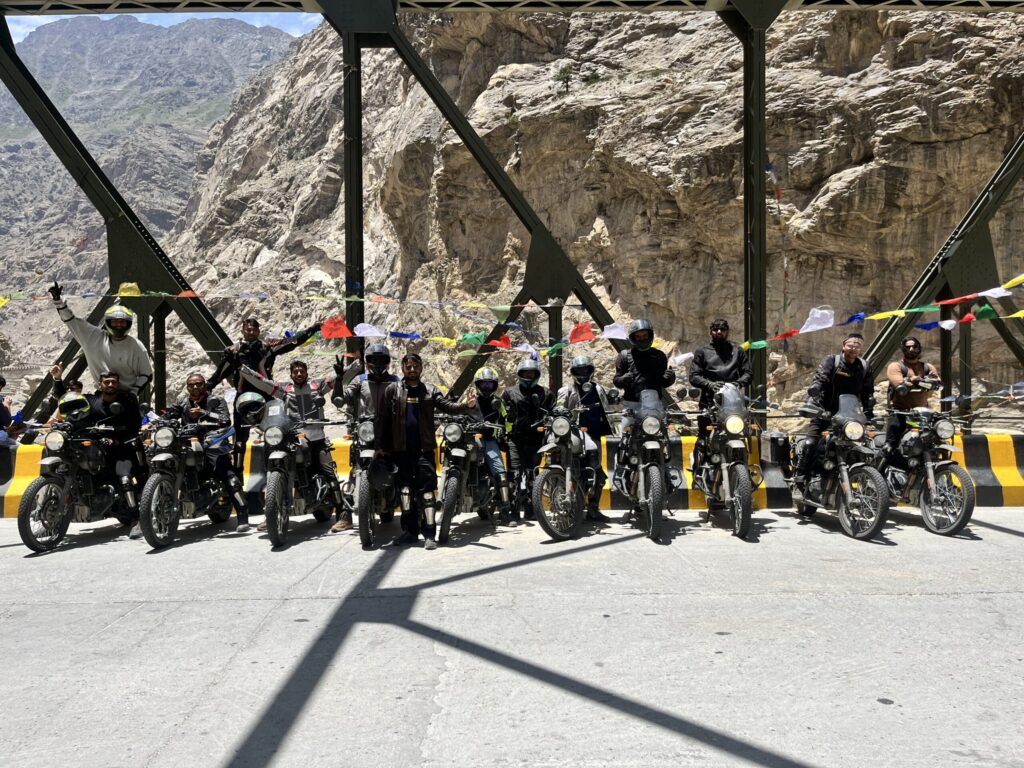
When tackling Trans-Himalayan circuits in August, professional agency backing transforms a dangerous gamble into an organized, exhilarating adventure.
       SOLO / DIY TRIP IN AUGUST                  FIXED GROUP DEPARTURE / EXPERT OPERATOR
┌────────────────────────────────────────┐       ┌────────────────────────────────────────┐
│ ❌ No live road updates                │       │ 24/7 Ground network & driver updates  │
│ ❌ Panics during road closures         │  VS   │ Flexible buffer days built into plan  │
│ ❌ Vulnerable to AMS & vehicle breakdowns│     │ Medical oxygen, 4x4 backups, captains  │
│ ❌ Extremely high private cab costs    │       │ Cost-shared heavy 4x4 / Tempo Traveller │
└────────────────────────────────────────┘       └────────────────────────────────────────┘
1. Master Drivers Who Know the Terrain
Organized group trips utilize seasoned local Himachali or Ladakhi drivers. These drivers do not just “steer”—they read mountain currents, know the exact tire placement for deep water crossings, understand rockfall physics, and know precisely when to pull over and wait out a slope.
2. Dynamic Route Maneuvering
If the Shimla–Kinnaur road gets blocked by a major slide, a professional group trip captain instantly reroutes the itinerary, coordinates hotel shifts through ground contacts, and secures alternative stays without stressing the travelers.
3. Safety Gear & AMS Management
Reputable fixed-departure operators carry commercial-grade medical oxygen cylinders, pulse oximeters, first-aid kits, and satellite/walkie-talkie communication tools for dead-zone emergency protocols.
4. Cost Sharing on Heavy 4×4 Logistics
Hiring an expert local driver with a high-ground-clearance 4×4 (like a Force Gurkha, Isuzu, or Mahindra Thar) or a modified 4×4 Tempo Traveller for 8 to 10 days alone can cost a fortune. Joining a Fixed Group Departure (FGD) gives you elite-grade mountain transport at a fraction of the cost.
Route Breakdown – Spiti vs. Zanskar in August
| Metric | Spiti Valley Circuit | Zanskar Valley Circuit |
| Primary Route | Shimla $\rightarrow$ Kinnaur $\rightarrow$ Kaza $\rightarrow$ Manali | Manali $\rightarrow$ Darcha $\rightarrow$ Shinku La $\rightarrow$ Padum |
| Monsoon Risk Zone | Kinnaur (NH-5) & Gramphu-Batal stretch | Mandi-Manali corridor & Darcha ascent |
| Recommended Vehicle | High-clearance SUV / Tempo Traveller | Strictly 4×4 SUV / Heavy 4×4 Commercial |
| Essential Strategy | Enter via Shimla; build 2-3 buffer days | Travel only with lead support vehicle & local crew |
The Verdict – Is It Safe?
Yes—but ONLY if you respect the mountains and hand the wheel over to experts.
Spiti and Zanskar in August are unbelievably surreal. You will see raw, dramatic landscapes, roaring rivers, ancient monasteries perched on dry cliffs, and vibrant local cultures without the suffocating summer crowds.
However, leave your self-drive ambitions and solo DIY plans for the lower hills in autumn. When it comes to the Trans-Himalayas in monsoon, book a curated Fixed Group Departure or hire an established, expert-led local tour operator. Let experienced professionals manage the landslides, water crossings, and logistics while you sit back and soak in the raw majesty of the Himalayas.